
An independent reference for the curious collectorThe American Silver Eagle Since 1986

The year index · 1986–2026

Find your year in the story.

Explore each year’s history, collector releases, and details worth a closer look. Follow Walking Liberty and the two eagle designs through four decades of American coinage.

An illustrated field guide

The art behind the dates.

The date changes every year. The central artwork often stays the same. These studies introduce the shared motifs; the entries below explain when designs, finishes, and special details changed.

AI-assisted artistic studies based on U.S. Mint imagery. Dates and lettering are omitted. About the illustrations

Engraved-style artistic study of Liberty striding toward the sunrise, with flowing drapery and branches
Walking LibertyThe obverse · since 1986
Engraved-style artistic study of the Type 1 eagle, with a striped shield, thirteen stars, an olive branch, and arrows
The heraldic eagleType 1 · 1986–2021
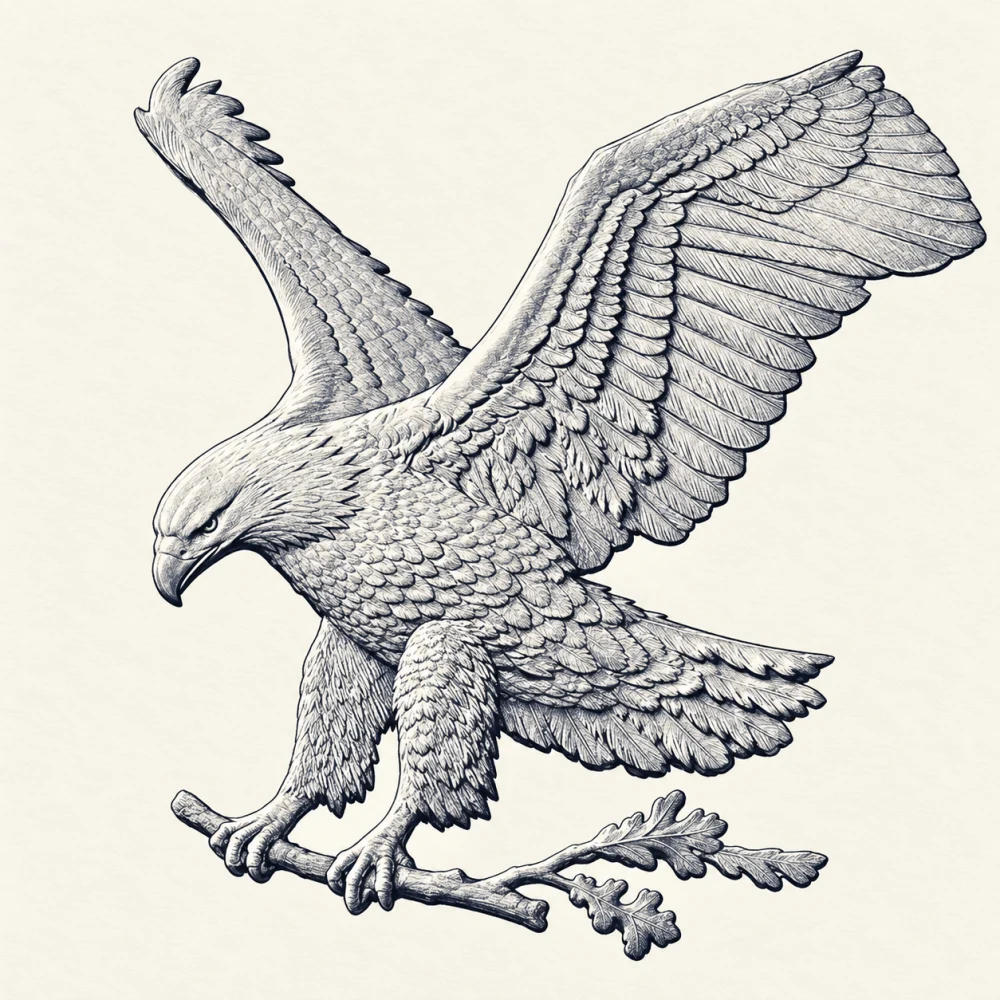
Engraved-style artistic study of the Type 2 eagle descending with spread wings and an oak branch in its talons
The landing eagleType 2 · introduced in 2021

41 years in the index

2021 belongs to both design eras
1986Type 1

The first Silver Eagle

The American Silver Eagle begins in 1986, pairing Adolph A. Weinman’s Walking Liberty with John Mercanti’s heraldic eagle. Weinman’s figure had appeared on the half dollar in 1916; the new silver coin gives that earlier artwork a different scale and purpose. Treasury Secretary James Baker strikes a Silver Eagle at the launch ceremony on October 29.

The two faces establish the series’ visual language: Liberty moves across a landscape, while the eagle forms a formal emblem around a shield. This is the starting point for a date collection and for comparing the original reverse with the design introduced in 2021.

Look closely

Start with the shield at the center of the reverse. The eagle’s outstretched wings create a broad, balanced silhouette, unlike the angled bird on the later landing-eagle design.

Sources & further readingU.S. Mint: American Eagle Coin Program U.S. Mint: Timeline of the U.S. Mint U.S. Mint: American Eagle Silver Proof Coin: designs and specifications Compare the designs → Understand the finishes →
Engraved-style artistic study of the Type 1 eagle, with a striped shield, thirteen stars, an olive branch, and arrows
The heraldic eagleType 1 · 1986–2021
1987Type 1

A second date, a continuing design

The second year continues the Walking Liberty and heraldic-eagle pairing. A 1987 coin belongs to the original design era; its new date does not mean that the Mint introduced a different main composition. This continuity is part of what makes a run of early Silver Eagles visually recognizable.

Use this date to study the movement in the obverse. The extended arm leads the eye in the direction of Liberty’s stride, while the fabric flows behind her. The eagle side offers a useful contrast: its shield and spread wings hold the composition around a central axis.

Look closely

Follow the line from Liberty’s outstretched hand through the folds of the flag. These are shared features of the early series, not design elements exclusive to 1987.

Sources & further readingU.S. Mint: American Eagle Silver Proof Coin: designs and specifications U.S. Mint: American Eagle Coin Program Compare the designs → Understand the finishes →
Engraved-style artistic study of Liberty striding toward the sunrise, with flowing drapery and branches
Walking LibertyThe obverse · since 1986
1988Type 1

The early series finds its rhythm

The 1988 Silver Eagle retains the original pair of designs. In the wider Mint story, March 31 brings a change in institutional status: West Point becomes an official branch Mint, and San Francisco regains Mint status. That administrative milestone should not be confused with a new Silver Eagle reverse.

For a design study, turn to the relationship between the eagle and its shield. The rectangular bands and curved lower outline of the shield interrupt the feather patterns, creating a clear focal point. The date places the coin in the series; the recognizable composition connects it to adjacent years.

Look closely

Compare the shield’s crisp geometry with the layered feathers around it. The contrast between regular lines and organic forms helps make the original eagle easy to recognize at a glance.

Sources & further readingU.S. Mint: Timeline of the U.S. Mint U.S. Mint: American Eagle Silver Proof Coin: designs and specifications Compare the designs → Understand the finishes →
Engraved-style artistic study of the Type 1 eagle, with a striped shield, thirteen stars, an olive branch, and arrows
The heraldic eagleType 1 · 1986–2021
1989Type 1

Walking Liberty in close detail

By 1989, the Silver Eagle is in its fourth issue year, still using the established obverse and reverse. This entry is a continuation of that artwork rather than a separate annual redesign. The changing date is one element within a much larger and deliberately familiar composition.

Look beyond Liberty’s overall silhouette to the way the flag wraps around the figure. Small folds, overlapping edges, and open areas of the background give the relief room to read. Compare those features under gentle, changing light; the same design can appear quite different in photographs of different finishes.

Look closely

Study the spaces between Liberty, the lettering, and the rim. The open background is part of the composition, helping the detailed figure stand apart from the surrounding inscriptions.

Sources & further readingU.S. Mint: American Eagle Silver Proof Coin: designs and specifications U.S. Mint: Anatomy of a Coin: surfaces and finishes Compare the designs → Understand the finishes →
Engraved-style artistic study of Liberty striding toward the sunrise, with flowing drapery and branches
Walking LibertyThe obverse · since 1986
1990Type 1

A familiar eagle and a production milestone

The 1990 coin continues the original artwork. It also belongs to an important chapter in the proof program: the Mint later identified 1990 as the year it began setting a maximum mintage for the Silver Eagle proof. An announced ceiling describes production policy, not an artistic change or a guarantee of the final total.

On the reverse, focus on the arrangement around the eagle rather than the date alone. The shield, branches, arrows, and lettering all share the available space. Their compact grouping gives this face the character of an official emblem, in contrast with the moving figure on the obverse.

Look closely

Look at the objects held in the eagle’s talons. The leafy branch and straight arrows have visibly different shapes, adding detail to the lower part of the heraldic composition.

Sources & further readingU.S. Mint: 1996 proof Silver Eagle sellout, announced in 1997 U.S. Mint: American Eagle Silver Proof Coin: designs and specifications Compare the designs → Understand the finishes →
Engraved-style artistic study of the Type 1 eagle, with a striped shield, thirteen stars, an olive branch, and arrows
The heraldic eagleType 1 · 1986–2021
1991Type 1

Five years of a revived classic

Five years after the launch, the 1991 Silver Eagle still carries the original design pairing. The anniversary does not bring a replacement eagle or a new Liberty scene. Its place in a collection comes from the date and issue, while the shared art keeps it connected to the rest of the early series.

This is a useful year for studying the obverse as a small landscape. Liberty’s stride, the ground beneath her, and the rising sun create depth within a shallow relief. The scene invites a different kind of looking from the emblematic eagle on the other side: follow the direction of travel before examining individual details.

Look closely

Find the rising sun near Liberty’s feet and trace the rays into the surrounding space. The sun belongs to the continuing Walking Liberty design, rather than a special 1991 edition.

Sources & further readingU.S. Mint: American Eagle Silver Proof Coin: designs and specifications U.S. Mint: 2002 American Eagle proof coins and their historical designs Compare the designs → Understand the finishes →
Engraved-style artistic study of Liberty striding toward the sunrise, with flowing drapery and branches
Walking LibertyThe obverse · since 1986
1992Type 1

The first San Francisco proof chapter closes

The 1992 proof carries the S mark of San Francisco, closing the initial San Francisco proof run before the annual proof moves to Philadelphia in 1993. Walking Liberty and the heraldic eagle remain the principal artwork. The production transition is recorded by a small letter rather than a replacement design.

Compare this proof with the following year’s P-marked issue. The shared shield and wings show continuity, while the different mint letter identifies the change in production. This is not the end of San Francisco’s Silver Eagle story: S-marked collector issues appear again in later special offerings.

Look closely

Find the S on the 1992 proof and compare it with P on the 1993 proof. The large heraldic composition stays familiar while the small mint mark tells a different production story.

Sources & further readingPCGS: 1992-S proof Silver Eagle PCGS: 1993-P proof Silver Eagle and Philadelphia Set U.S. Mint: 2012 San Francisco Two-Coin Silver Proof Set Compare the designs → Understand the finishes →
Engraved-style artistic study of the Type 1 eagle, with a striped shield, thirteen stars, an olive branch, and arrows
The heraldic eagleType 1 · 1986–2021
1993Type 1

Philadelphia takes over the annual proof

The Silver Eagle proof moves from San Francisco to Philadelphia in 1993, introducing P to the series. The principal Walking Liberty and heraldic-eagle artwork continues. A 1993 proof also appears in the special Philadelphia Set with fractional gold proof Eagles and a bicentennial silver medal.

The change gives this date a clear place in the proof series even though the eagle’s pose is familiar. Compare the small P with the previous year’s S, then record the finish and any original set context. A different mint mark identifies the issue without creating a new main reverse design.

Look closely

Look for P on the proof reverse. The letter marks Philadelphia’s arrival in the Silver Eagle proof series; the shield, wings, and eagle still belong to the original Type 1 composition.

Sources & further readingPCGS: 1993-P proof Silver Eagle and Philadelphia Set PCGS: 1992-S proof Silver Eagle Compare the designs → Understand the finishes →
Engraved-style artistic study of the Type 1 eagle, with a striped shield, thirteen stars, an olive branch, and arrows
The heraldic eagleType 1 · 1986–2021
1994Type 1

A date to study beyond the headline

The 1994 issue uses the established Silver Eagle designs. Later Mint reporting discussed the 1994 proof among the program’s smaller early proof issues, but that production context does not create a new reverse type. Always keep proof figures separate from bullion figures when researching this date.

The artwork offers another reason to pause. The branches carried by Liberty form a dense cluster against the folds of her clothing and flag. Compare that texture with the more open background. Observing those relationships is useful even when two adjacent dates share the same fundamental design.

Look closely

Look at the branching forms beside Liberty’s body and the folds beneath them. This study highlights a recurring part of Weinman’s artwork, not a feature added only in 1994.

Sources & further readingU.S. Mint: 1997 proof Silver Eagles: production and remaining inventory U.S. Mint: American Eagle Silver Proof Coin: designs and specifications Compare the designs → Understand the finishes →
Engraved-style artistic study of Liberty striding toward the sunrise, with flowing drapery and branches
Walking LibertyThe obverse · since 1986
1995Type 1

The West Point anniversary proof

For the tenth-anniversary offering, a West Point silver proof joins a set of four gold proof Eagles. The W-marked Silver Eagle is a distinct 1995 issue, while the familiar Walking Liberty and heraldic-eagle compositions remain in place. The important difference is the particular release and its mint mark.

This date demonstrates why an annual checklist can be more complicated than one coin per year. A collection that includes every proof issue needs more information than the date alone. Read the small letter on the actual coin and preserve any original set documentation alongside your notes.

Look closely

The W is a small identifying detail within the familiar Type 1 reverse. Do not expect a different eagle drawing: the anniversary issue’s identity depends on the date, finish, and mint mark together.

Sources & further readingU.S. Mint: 2001: Silver Proof Eagle production moves to West Point Compare the designs → Understand the finishes →
Engraved-style artistic study of the Type 1 eagle, with a striped shield, thirteen stars, an olive branch, and arrows
The heraldic eagleType 1 · 1986–2021
1996Type 1

A proof issue with a documented sellout

The 1996 Silver Eagle continues the original artwork. In May 1997, the Mint announced that the 1996 proof had sold out, describing it as the first proof sellout since a maximum mintage was introduced in 1990. The announcement concerns the proof edition; it should not be applied to all 1996 Eagles.

For a visual comparison, place the proof finish beside a bullion example of the same design. The surfaces change how light separates Liberty from the background, even though the main figure is familiar. Photographing both under comparable lighting can make the difference easier to understand.

Look closely

Concentrate on the boundary between Liberty’s raised figure and the background. Surface contrast can make familiar contours appear stronger without changing the underlying artwork or creating a new reverse type.

Sources & further readingU.S. Mint: 1996 proof Silver Eagle sellout, announced in 1997 U.S. Mint: Anatomy of a Coin: surfaces and finishes Compare the designs → Understand the finishes →
Engraved-style artistic study of Liberty striding toward the sunrise, with flowing drapery and branches
Walking LibertyThe obverse · since 1986
1997Type 1

The Silver Eagle keeps its own identity

The American Eagle family expands with platinum coins in 1997, but the Silver Eagle retains Walking Liberty and the heraldic eagle. Different metals within the Eagle program have different design histories. A description of a new platinum reverse should not be mistaken for a change to this silver series.

The Mint’s contemporary reporting also distinguishes the 1997 proof’s production run from its remaining sales inventory. That is useful historical context when reading older figures. In the art itself, the shield and spread wings remain the strongest visual link to the first Silver Eagle issued in 1986.

Look closely

Check the complete reverse composition before identifying an Eagle by its name alone. The Silver Eagle’s Type 1 shield-and-bird arrangement differs from the designs used on gold and platinum Eagles.

Sources & further readingU.S. Mint: American Eagle Coin Program U.S. Mint: 1997 proof Silver Eagles: production and remaining inventory Compare the designs → Understand the finishes →
Engraved-style artistic study of the Type 1 eagle, with a striped shield, thirteen stars, an olive branch, and arrows
The heraldic eagleType 1 · 1986–2021
1998Type 1

Continuity through a changing Mint

The Mint’s catalog goes online in 1998, changing how collectors can encounter its offerings. The Silver Eagle itself continues the same principal obverse and reverse artwork. This is a year in which the collecting experience evolves more visibly than the coin’s main design.

The annual proof remains part of the Mint’s American Eagle offerings. For an artistic study, compare the feather textures across the spread wings with the straight lines of the shield. Reading those patterns slowly reveals the density of the heraldic design, even when the overall silhouette has become familiar.

Look closely

Move from the broad wing outline to the smaller feather groupings. The design combines a strong silhouette with fine internal texture, both of which can look different as lighting changes.

Sources & further readingU.S. Mint: Timeline of the U.S. Mint U.S. Mint: 1998 American Eagle proof offerings U.S. Mint: American Eagle Silver Proof Coin: designs and specifications Compare the designs → Understand the finishes →
Engraved-style artistic study of the Type 1 eagle, with a striped shield, thirteen stars, an olive branch, and arrows
The heraldic eagleType 1 · 1986–2021
1999Type 1

The last date of the 1900s

The Mint promoted the 1999 proof Eagles as the final dates of the 1900s. For the Silver Eagle, that calendar milestone comes with the existing Walking Liberty and heraldic-eagle designs. Its place at the end of a century does not introduce a separate silver reverse.

The year is useful for studying the relationship between an inscription and the rest of a coin. The date sits within the larger obverse arrangement, while the figure and landscape remain the dominant elements. When cataloging a coin, record the full issue and finish rather than treating a memorable date as a complete identification.

Look closely

Look at the date below Liberty, then return to the figure above it. The new numerals change the annual identity while the surrounding composition connects 1999 to earlier Type 1 issues.

Sources & further readingU.S. Mint: 1999 proof Eagles: the last dates of the 1900s U.S. Mint: American Eagle Silver Proof Coin: designs and specifications Compare the designs → Understand the finishes →
Engraved-style artistic study of Liberty striding toward the sunrise, with flowing drapery and branches
Walking LibertyThe obverse · since 1986
2000Type 1

A new calendar, the established eagle

The 2000 Silver Eagle carries the familiar design into a new calendar era. The Mint’s release announcement emphasized the occasion, but the silver coin retains its established main artwork. The regular proof program is also approaching a production change: the Mint will move it from Philadelphia to West Point in 2001.

Compare a 2000 issue with an early Silver Eagle to see the continuity in the large design elements. Then compare its proof mint attribution with the following year. Those are two different kinds of observation: one concerns composition, and the other concerns the identity of the issue.

Look closely

Use the shield and wing arrangement to identify the design era. Use the date and mint mark to identify the issue within that era; a production move does not necessarily mean new artwork.

Sources & further readingU.S. Mint: 2000 American Eagle gold and silver proof release U.S. Mint: 2001: Silver Proof Eagle production moves to West Point Compare the designs → Understand the finishes →
Engraved-style artistic study of the Type 1 eagle, with a striped shield, thirteen stars, an olive branch, and arrows
The heraldic eagleType 1 · 1986–2021
2001Type 1

The annual proof moves to West Point

Regular Silver Eagle proof production moves from Philadelphia to West Point in 2001. The proof now carries W, connecting this annual product to the facility that had previously struck the special 1995 anniversary silver proof. The heraldic eagle remains the reverse design.

The Mint’s announcement also says bullion Eagles will continue without a mint mark. That distinction matters: production location and a letter visible on the coin are not interchangeable. Compare the proof’s small identifying mark with the unchanged larger artwork to see how much an issue can change without a wholesale redesign.

Look closely

Look for W on the proof reverse, then step back to the shield and spread wings. The letter identifies the issue’s mint; the larger elements identify the continuing Type 1 design.

Sources & further readingU.S. Mint: 2001: Silver Proof Eagle production moves to West Point Compare the designs → Understand the finishes →
Engraved-style artistic study of the Type 1 eagle, with a striped shield, thirteen stars, an olive branch, and arrows
The heraldic eagleType 1 · 1986–2021
2002Type 1

A classic becomes an annual subscription

The West Point proof continues in 2002, and the Mint adds Silver Eagle proofs to its subscription program. That service gives collectors a way to receive successive annual issues automatically. The change concerns how the coins are offered, while the established artwork remains.

The Mint’s release draws attention to the design’s older roots: Walking Liberty first appeared on the half dollar in 1916. In a close study, follow the direction of the figure’s stride toward the sun. The Silver Eagle revives that historical image in a modern one-ounce format rather than creating a new Liberty for each date.

Look closely

Follow the forward movement of Liberty’s arm and stride. The artwork’s earlier half-dollar history helps explain its classical character, even on a coin dated many decades after the original design.

Sources & further readingU.S. Mint: 2002 American Eagle proof coins and their historical designs U.S. Mint: 2002: Silver Eagle proofs join the subscription program Compare the designs → Understand the finishes →
Engraved-style artistic study of Liberty striding toward the sunrise, with flowing drapery and branches
Walking LibertyThe obverse · since 1986
2003Type 1

The West Point proof tradition continues

The 2003 proof is struck at West Point and carries W. Its release continues the established pairing of Weinman’s Liberty and Mercanti’s eagle. The Mint describes the silver proof as a longstanding collector offering, showing how the program had grown into an annual tradition.

This date is a useful place to examine the reverse’s visual balance. The wings create breadth, the shield anchors the center, and the smaller branch and arrows fill the lower spaces. The art does not need a new annual theme to reward closer observation; different details emerge as the viewing scale changes.

Look closely

Compare the central shield with the details extending to either side. The arrangement feels balanced overall while the branch and arrows create different shapes below the wings.

Sources & further readingU.S. Mint: 2003 American Eagle Silver Proof Coin Compare the designs → Understand the finishes →
Engraved-style artistic study of the Type 1 eagle, with a striped shield, thirteen stars, an olive branch, and arrows
The heraldic eagleType 1 · 1986–2021
2004Type 1

A closer look at Liberty’s branches

The 2004 West Point proof retains the regular W mint mark and the original design pairing. Its contemporary release identifies both artists and describes the branches held by Liberty as laurel and oak. These small elements are part of the established composition, not an addition for 2004.

Use this year’s study to look at the contrast between those branching forms and the long folds of clothing around them. The reverse offers a second botanical detail in the eagle’s olive branch. Seeing the two sides together makes it easier to distinguish the separate motifs rather than treating every branch as the same object.

Look closely

On the obverse, study Liberty’s laurel and oak; on the reverse, find the eagle’s olive branch. Their different roles belong to the two artists’ distinct compositions.

Sources & further readingU.S. Mint: 2004 American Eagle Silver Proof Coin Compare the designs → Understand the finishes →
Engraved-style artistic study of Liberty striding toward the sunrise, with flowing drapery and branches
Walking LibertyThe obverse · since 1986
2005Type 1

A change in proof production policy

For the 2005 Silver Eagle proof, the Mint announces no fixed mintage ceiling and an earlier release than the previous year. The W-marked proof still uses the same main designs. This is an example of a meaningful annual change that belongs to the program’s production policy rather than to its artwork.

An unlimited announced mintage does not mean an unlimited number of coins was struck. Keep that distinction in your notes while studying the actual piece. Visually, the familiar shield, wings, and surrounding inscriptions continue to identify the original heraldic-eagle reverse.

Look closely

Separate what is visible from what a production announcement tells you. The date and W can identify the proof issue; an announced mintage policy is research information, not a design feature.

Sources & further readingU.S. Mint: 2005 proof Silver Eagle: no announced mintage ceiling Compare the designs → Understand the finishes →
Engraved-style artistic study of the Type 1 eagle, with a striped shield, thirteen stars, an olive branch, and arrows
The heraldic eagleType 1 · 1986–2021
2006Type 1

Three finishes for twenty years

The twentieth-anniversary silver set brings together a W proof, a P reverse proof, and a W uncirculated coin. The Mint also introduces its collector uncirculated Eagles, made from specially burnished blanks and carrying mint marks. All use the familiar central artwork.

The reverse proof changes the distribution of shine and frost: the background is frosted and the raised design is reflective. Seen beside a traditional proof, it demonstrates how finishing can change the visual emphasis without replacing the eagle or Liberty. Record the finish as carefully as the date when distinguishing these releases.

Look closely

Compare the background with the raised eagle. In the reverse proof, their usual proof contrast is inverted. The P mark identifies that anniversary-set coin; the W coins have other finishes.

Sources & further readingU.S. Mint: 2006: American Eagle 20th Anniversary Sets Compare the designs → Understand the finishes →
Engraved-style artistic study of the Type 1 eagle, with a striped shield, thirteen stars, an olive branch, and arrows
The heraldic eagleType 1 · 1986–2021
2007Type 1

The burnished edition becomes a continuing option

The collector uncirculated Silver Eagle returns in 2007 after its 2006 introduction. It is struck on specially burnished blanks and carries the W mark of West Point. Its basic designs match the bullion and proof versions, so the finish and mint mark do important work in identification.

Collectors often call this product the burnished Eagle. That term describes its manufacturing context, not a separate annual eagle drawing. Comparing an unmarked bullion piece with the W collector edition shows why a collection organized by issue can contain several coins with nearly identical compositions and the same date.

Look closely

Check the W and the surface treatment together. The main heraldic eagle is shared with other 2007 issues, so a familiar reverse alone does not tell you which product you have.

Sources & further readingU.S. Mint: 2007 collector uncirculated Silver Eagle Compare the designs → Understand the finishes →
Engraved-style artistic study of the Type 1 eagle, with a striped shield, thirteen stars, an olive branch, and arrows
The heraldic eagleType 1 · 1986–2021
2008Type 1

A reverse variety hidden in the lettering

Some 2008-W collector uncirculated, or burnished, Silver Eagles were struck with the earlier reverse style used in 2007. PCGS and NGC recognize this Reverse of 2007 variety. The heraldic eagle remains the main subject; the differences include lettering and other small details within the Type 1 design.

A useful diagnostic is the U in UNITED. The earlier reverse has a rounded, bowl-shaped U without the small spur on its right side; the normal 2008 style has that spur. This variety description concerns the 2008-W burnished issue, not every 2008 Silver Eagle. Compare an actual coin with the linked diagnostic photographs before assigning an attribution.

Look closely

Inspect the U in UNITED on the reverse of a 2008-W burnished coin. The Reverse of 2007 lacks the right-side spur seen on the normal 2008 lettering; the eagle alone will not identify it.

Sources & further readingU.S. Mint: 2008 collector uncirculated Silver Eagle PCGS: 2008-W burnished Silver Eagle, Reverse of 2007 NGC: diagnostic photographs of the 2008-W Reverse of 2007 variety Compare the designs → Understand the finishes →
Engraved-style artistic study of the Type 1 eagle, with a striped shield, thirteen stars, an olive branch, and arrows
The heraldic eagleType 1 · 1986–2021
2009Type 1

Bullion continues; collector editions pause

The Mint does not offer 2009 proof or collector uncirculated Silver Eagles. Demand for bullion uses the available silver blanks; the missing proof leaves a documented gap in the annual collector series. Bullion Silver Eagles are still issued, carrying the established Walking Liberty and heraldic-eagle designs.

That distinction makes 2009 an important year for planning a collection. A bullion date set can include it, while a run of annual proofs must acknowledge the missing issue. The design study here represents the continuing artwork, not a proof coin that the Mint did not produce for this date.

Look closely

Recognize the familiar Type 1 reverse, then identify the product category. There is no official 2009 proof Silver Eagle to match the surrounding years in an annual proof collection.

Sources & further readingU.S. Mint: 2009: Proof and uncirculated Eagles not offered U.S. Mint: 2010: American Eagle Silver Proof returns Compare the designs → Understand the finishes →
Engraved-style artistic study of the Type 1 eagle, with a striped shield, thirteen stars, an olive branch, and arrows
The heraldic eagleType 1 · 1986–2021
2010Type 1

The proof returns

After the 2009 interruption, the Mint announces the return of the Silver Eagle proof for November 19, 2010. Improved availability of blanks makes the collector offering possible again. The proof bears W and retains the original main designs.

The collector uncirculated edition does not return in 2010, so the recovery is not identical across all product types. A checklist should distinguish the proof’s return from the continued gap in the burnished series. In the artwork, the heraldic eagle remains a point of continuity through changes in production and availability.

Look closely

The return is visible in the availability of a W proof, not in a new eagle. Keep the reflective proof surfaces separate from the collector uncirculated finish when documenting the year.

Sources & further readingU.S. Mint: 2010: American Eagle Silver Proof returns Compare the designs → Understand the finishes →
Engraved-style artistic study of the Type 1 eagle, with a striped shield, thirteen stars, an olive branch, and arrows
The heraldic eagleType 1 · 1986–2021
2011Type 1

Five coins for the twenty-fifth anniversary

The twenty-fifth-anniversary set combines five Silver Eagles: W proof and uncirculated coins, a P reverse proof, an S uncirculated coin, and an unmarked bullion coin. The shared date and main artwork make the different finishes and marks especially important.

This is a compact lesson in how an issue differs from a design. The set does not contain five different eagle compositions. Instead, it presents the familiar art through different products and manufacturing treatments. Compare the whole coin first, then work through mint mark, finish, and original set context to identify each member.

Look closely

Look for P, S, W, or no mark, then compare the treatment of the background and raised design. The five-coin set turns small identifying details into the main story of the year.

Sources & further readingU.S. Mint: 2011: American Eagle 25th Anniversary Silver Coin Set Compare the designs → Understand the finishes →
Engraved-style artistic study of the Type 1 eagle, with a striped shield, thirteen stars, an olive branch, and arrows
The heraldic eagleType 1 · 1986–2021
2012Type 1

San Francisco pairs proof with reverse proof

The 2012 San Francisco Two-Coin Silver Proof Set pairs a traditional proof with a reverse proof, both bearing S. Because both coins share the mint mark and the main artwork, the surface finish is the defining visible difference between them.

The pairing is particularly helpful for understanding photographic contrast. The background and raised elements exchange their polished and frosted roles, so the same eagle can seem brighter or darker under the same lighting. Study the surfaces rather than assuming that a dramatic change in appearance must represent a new reverse design.

Look closely

Compare the field around the eagle with the eagle itself. Both set coins carry S; the distribution of frost and reflection distinguishes the traditional proof from the reverse proof.

Sources & further readingU.S. Mint: 2012 San Francisco Two-Coin Silver Proof Set U.S. Mint: Anatomy of a Coin: surfaces and finishes Compare the designs → Understand the finishes →
Engraved-style artistic study of the Type 1 eagle, with a striped shield, thirteen stars, an olive branch, and arrows
The heraldic eagleType 1 · 1986–2021
2013Type 1

An enhanced finish brings out the details

The West Point Two-Coin Silver Set marks the seventy-fifth anniversary of the facility’s building. Its W coins pair a reverse proof with an enhanced uncirculated Silver Eagle. The latter uses different treatments on selected areas rather than one uniform finish across the entire design.

The Mint specifies contrasting treatments for details such as Liberty’s sandals and parts of the flag, as well as the eagle’s ribbon, arrows, branch, and shield. A lightly frosted field separates those elements from the background. The result is a different reading of the familiar art, not a replacement for it.

Look closely

On the enhanced uncirculated coin, examine the flag, sandals, and background separately. Their different surface treatments make this a study of selective contrast within the original Walking Liberty composition.

Sources & further readingU.S. Mint: 2013 West Point set: enhanced uncirculated surface details Compare the designs → Understand the finishes →
Engraved-style artistic study of Liberty striding toward the sunrise, with flowing drapery and branches
Walking LibertyThe obverse · since 1986
2014Type 1

The traditional proof remains a reference point

The 2014 W proof continues the standard Silver Eagle design pairing after the special surface treatments of 2013. The Mint describes carefully prepared silver blanks and demand-led production for the annual proof offering. The principal figures remain Weinman’s Liberty and Mercanti’s heraldic eagle.

Use the regular proof as a comparison point when learning about enhanced finishes. The same folds, branches, shield, and wings appear, but their treatment can change the way individual details stand out. Comparing like lighting and viewing angles helps separate a finish difference from a difference in the artwork itself.

Look closely

Study the overall contrast between the raised figure and the open field. Then compare a documented enhanced finish, looking for selective treatments instead of expecting a different Liberty outline.

Sources & further readingU.S. Mint: 2014 American Eagle Silver Proof Coin U.S. Mint: 2013 West Point set: enhanced uncirculated surface details Compare the designs → Understand the finishes →
Engraved-style artistic study of Liberty striding toward the sunrise, with flowing drapery and branches
Walking LibertyThe obverse · since 1986
2015Type 1

The original reverse approaches thirty years

The 2015 Silver Eagle proof opens the year with the familiar W mark and original design pairing. It stands just before the program’s thirtieth-anniversary issues. The main eagle composition continues unchanged in theme, preserving the shield, spread wings, branch, and arrows.

A 2015 example makes a useful visual comparison with the anniversary collector editions of 2016. Study both faces, but remember that the most important commemorative change in those later editions is on the edge. Looking only at the large front and back pictures can miss information elsewhere on a coin.

Look closely

Recognize the heraldic reverse, then include the edge in your observations. The next year’s anniversary detail demonstrates why a full coin record should cover more than the two main faces.

Sources & further readingU.S. Mint: 2015 American Eagle Silver Proof Coin U.S. Mint: 2016 Annual Report: 30th anniversary edge lettering Compare the designs → Understand the finishes →
Engraved-style artistic study of the Type 1 eagle, with a striped shield, thirteen stars, an olive branch, and arrows
The heraldic eagleType 1 · 1986–2021
2016Type 1

The anniversary is written on the edge

For the thirtieth anniversary, the Silver Eagle’s numismatic editions carry “30TH ANNIVERSARY” edge lettering in place of the usual reeds. The familiar Walking Liberty and heraldic-eagle faces remain. The special edge belongs to the collector editions, not every Silver Eagle dated 2016.

This is a milestone that a face-on illustration cannot fully explain. The edge becomes part of the identification process alongside date, finish, and mint mark. Examine it through a suitable holder where possible, and use official issue descriptions to distinguish the anniversary collector coins from the bullion edition.

Look closely

Look beyond the two faces for the anniversary edge inscription. The shared Type 1 artwork does not reveal this feature, and a 2016 date alone does not establish that the edge is lettered.

Sources & further readingU.S. Mint: 2016 proof Silver Eagle: anniversary edge lettering U.S. Mint: 2016 uncirculated Silver Eagle: anniversary edge lettering Compare the designs → Understand the finishes →
Engraved-style artistic study of the Type 1 eagle, with a striped shield, thirteen stars, an olive branch, and arrows
The heraldic eagleType 1 · 1986–2021
2017Type 1

An S proof joins the Congratulations Set

The 2017 Congratulations Set features an S-marked Silver Eagle proof from San Francisco. The Mint also identifies the same S proof for the year’s Limited Edition Silver Proof Set. The packaging contexts differ, while the coin’s familiar main design continues.

This year shows why a product name is not always a separate coin design. When researching a set, identify the actual coin inside and record where else it was offered. For visual comparison, the small mint mark matters more than expecting a new scene on either side of the Silver Eagle.

Look closely

Find the S on the proof reverse. The familiar eagle and shield remain; the mint mark and the original product context help distinguish this release within the year’s offerings.

Sources & further readingU.S. Mint: 2017 Congratulations Set: San Francisco proof Silver Eagle Compare the designs → Understand the finishes →
Engraved-style artistic study of the Type 1 eagle, with a striped shield, thirteen stars, an olive branch, and arrows
The heraldic eagleType 1 · 1986–2021
2018Type 1

Proofs from West Point and San Francisco

The 2018 proof offerings include coins from West Point and San Francisco. Both use Walking Liberty and the original heraldic eagle, making the mint mark an important identifying detail. The Mint releases the West Point proof in January and the San Francisco offering in August.

The year invites a direct comparison of similar-looking collector coins. Begin with the date and letter, then compare the finish under consistent light. A different mint mark does not automatically bring different artwork, and a product’s release date should be kept separate from the date struck on the coin.

Look closely

Compare W and S proofs of the same date. Their principal design is shared, so use the small identifying letter rather than a change in the eagle’s pose to tell the issues apart.

Sources & further readingU.S. Mint: 2018 West Point American Eagle Silver Proof Coin U.S. Mint: 2018 San Francisco American Eagle Silver Proof Coin Compare the designs → Understand the finishes →
Engraved-style artistic study of the Type 1 eagle, with a striped shield, thirteen stars, an olive branch, and arrows
The heraldic eagleType 1 · 1986–2021
2019Type 1

Enhanced reverse proof adds layers of contrast

Enhanced reverse proof becomes a prominent Silver Eagle finish in 2019. An Eagle with that finish appears in the joint U.S.–Canadian Pride of Two Nations set, and the Mint later releases a San Francisco enhanced reverse proof individually. The underlying Liberty and heraldic-eagle designs remain familiar.

The enhanced treatment uses several polished and frosted areas instead of a simple two-part contrast. The Mint’s finish guide identifies different treatments on the eagle, shield, branch, arrows, lettering, and field. The separate releases should be recorded individually; sharing a finish name does not make them the same issue.

Look closely

Look for several levels of texture within the raised design, especially across the eagle and shield. Enhanced reverse proof changes the distribution of surface finishes rather than replacing the heraldic composition.

Sources & further readingU.S. Mint: 2019 Pride of Two Nations set U.S. Mint: 2019 San Francisco enhanced reverse proof Silver Eagle U.S. Mint: Coin glossary: enhanced reverse proof surface treatments Compare the designs → Understand the finishes →
Engraved-style artistic study of the Type 1 eagle, with a striped shield, thirteen stars, an olive branch, and arrows
The heraldic eagleType 1 · 1986–2021
2020Type 1

A V75 privy marks a special proof

A special 2020 Silver Eagle proof honors the seventy-fifth anniversary of the end of World War II. Its obverse adds a V75 privy within an outline based on the Rainbow Pool at the World War II Memorial. The mark belongs to that commemorative offering, not to every 2020 Eagle.

The year is also the last full issue year before the reverse transition. Walking Liberty and the heraldic eagle still provide the principal artwork. To identify the special proof, examine the small added symbol and the documented product, rather than looking for a completely different eagle on the reverse.

Look closely

Check the obverse for the V75 symbol on the special anniversary proof. A privy is an additional design mark; it serves a different purpose from the mint letter identifying a facility.

Sources & further readingU.S. Mint: 2020 End of World War II anniversary coins and privy mark U.S. Mint: 2021: Redesigned American Eagle Silver Proof Coin Compare the designs → Understand the finishes →
Engraved-style artistic study of Liberty striding toward the sunrise, with flowing drapery and branches
Walking LibertyThe obverse · since 1986
2021Types 1 & 2

Two reverse designs share one date

The thirty-fifth-anniversary year bridges two design eras. Early 2021 issues retain Mercanti’s heraldic eagle; later issues introduce Emily Damstra’s landing eagle, sculpted by Michael Gaudioso. Both carry 2021, so the date alone cannot identify which reverse is present.

The redesign also refreshes Walking Liberty with details drawn from the Mint’s historical assets and adds Weinman’s artist mark. A reeded-edge variation joins the security features. The main visual change is unmistakable: the formal shield-bearing eagle gives way to a bird in motion carrying an oak branch.

Look closely

Compare the reverses side by side. Type 1 centers an eagle behind a shield; Type 2 shows an angled landing bird with an oak branch. Both are valid 2021 designs.

Sources & further readingU.S. Mint: 2021: Redesigned American Eagle Silver Proof Coin U.S. Mint: American Eagle Silver Proof Coin: designs and specifications Compare the designs → Understand the finishes →
Engraved-style artistic study of the Type 1 eagle, with a striped shield, thirteen stars, an olive branch, and arrows
The heraldic eagleType 1 · 1986–2021
Engraved-style artistic study of the Type 2 eagle descending with spread wings and an oak branch in its talons
The landing eagleType 2 · introduced in 2021
2022Type 2

The first full year of the landing eagle

The 2022 Silver Eagle is the first full annual issue after the 2021 transition. The landing-eagle reverse and refreshed Walking Liberty carry forward, including the traditional Weinman artist mark on the obverse. The Mint’s San Francisco proof release also documents the same design used by its West Point counterpart.

Study the new reverse as a moment of movement. The wings, angled body, and extended talons direct attention toward the oak branch. Unlike the earlier heraldic emblem, the scene suggests a specific action: an eagle approaching a landing with material that could be added to a nest.

Look closely

Follow the line from the wings through the body to the branch in the talons. The landing pose and absence of the central heraldic shield quickly distinguish Type 2 from the earlier reverse.

Sources & further readingU.S. Mint: 2022 San Francisco Silver Eagle and the refreshed designs Compare the designs → Understand the finishes →
Engraved-style artistic study of the Type 2 eagle descending with spread wings and an oak branch in its talons
The landing eagleType 2 · introduced in 2021
2023Type 2

The new reverse becomes familiar

The 2023 Silver Eagle continues the design introduced in 2021. The West Point proof carries W and the refreshed Walking Liberty, paired with the landing eagle. This is a continuation of the Type 2 artwork, not a third main reverse design.

With the broad change now established, turn to smaller visual relationships. The bird’s feathers overlap in changing directions, and the oak branch extends beyond the talons. The composition leaves different areas of open background around the eagle than the older shield-and-wings arrangement, giving the reverse a less symmetrical character.

Look closely

Compare the angles of the wings and the branch. The uneven distribution of shapes gives the landing eagle a sense of motion, while the surrounding inscriptions keep it within the coin’s circular frame.

Sources & further readingU.S. Mint: 2023 West Point American Eagle Silver Proof Coin U.S. Mint: American Eagle Silver Proof Coin: designs and specifications Compare the designs → Understand the finishes →
Engraved-style artistic study of the Type 2 eagle descending with spread wings and an oak branch in its talons
The landing eagleType 2 · introduced in 2021
2024Type 2

One landing eagle, more than one proof mint

The 2024 San Francisco proof continues the Type 2 design alongside its West Point counterpart. Both retain the refreshed Walking Liberty and the eagle approaching a landing. A change in the mint letter identifies a different issue without replacing the main artistic composition.

For this year’s visual study, concentrate on the oak branch and how it interacts with the eagle’s talons. That object helps explain the action in the scene. It also offers a useful comparison with the olive branch held by the original heraldic eagle, where the branch is part of an emblem rather than a landing movement.

Look closely

Study the oak branch beneath the bird and compare it with the branch in the original reverse. The Type 2 scene connects the object to a physical action: carrying it toward a landing.

Sources & further readingU.S. Mint: 2024 San Francisco American Eagle Silver Proof Coin U.S. Mint: American Eagle Silver Proof Coin: designs and specifications Compare the designs → Understand the finishes →
Engraved-style artistic study of the Type 2 eagle descending with spread wings and an oak branch in its talons
The landing eagleType 2 · introduced in 2021
2025Type 2

Special privies add another layer of identity

Special 2025 proof Eagles mark the 250th anniversaries of the Army, Navy, and Marine Corps with their respective emblems. These offerings come from West Point, San Francisco, and Philadelphia respectively. The Mint also releases a West Point proof made with laser-engraved master dies and a special privy.

The main designs remain refreshed Walking Liberty and the landing eagle. The distinguishing details belong to particular releases, so a 2025 date does not guarantee a military or laser privy. Record the exact symbol, finish, and mint letter together when identifying one of these special coins.

Look closely

Examine the obverse for an added emblem, then check the reverse mint mark. The privy identifies a special release; the main Liberty and eagle designs connect it to the continuing Type 2 series.

Sources & further readingU.S. Mint: 2025 Army anniversary Silver Eagle privy mark U.S. Mint: 2025 Navy anniversary Silver Eagle privy mark U.S. Mint: 2025 Marine Corps anniversary Silver Eagle privy mark U.S. Mint: 2025 Silver Eagle made with laser-engraved master dies Compare the designs → Understand the finishes →
Engraved-style artistic study of Liberty striding toward the sunrise, with flowing drapery and branches
Walking LibertyThe obverse · since 1986
2026Type 2

Forty years of Eagles and America’s 250th

The Silver Eagle reaches forty years during the United States’ 250th anniversary. Selected collector editions combine the familiar Type 2 artwork with a Liberty Bell privy and the dual date 1776–2026. The enhanced uncirculated offering adds another surface treatment to study.

The Mint distinguishes these editions from regular bullion, which carries the single 2026 date and no mint mark. Its July guide also identifies a Philadelphia proof in the Congratulations Set with a single date. Check the exact product before assuming that every 2026 coin has the same dates, privy, or finish.

Look closely

Read the date arrangement, look for the Liberty Bell symbol, and confirm the mint mark and finish. These details vary by issue even though the landing eagle remains the main reverse design.

Sources & further readingU.S. Mint: July 2026 Coins Online: differences among 2026 Eagles U.S. Mint: 2026 Silver Enhanced Uncirculated Coin Compare the designs → Understand the finishes →
Engraved-style artistic study of the Type 2 eagle descending with spread wings and an oak branch in its talons
The landing eagleType 2 · introduced in 2021
A note on the numbers

The index includes the 2026 issue year. It does not claim final 2026 mintage totals. For production and sales research, consult the underlying Mint reports.

Learn how to read mintage figures →

Design periods: U.S. Mint: American Eagle Silver Proof Coin: designs and specifications · Milestones: cited in the history timeline.

AI-assisted artistic interpretation based on U.S. Mint imagery. Dates, inscriptions, and mint marks are omitted from the illustration; use the reference photograph to examine the actual coin.